Real vs Fake Crystal Bracelet: How to Tell Before You Buy
Real vs fake crystal bracelet and how to tell if crystal is real are high-friction Google queries — people get burned by glass sold as “natural healing crystal.
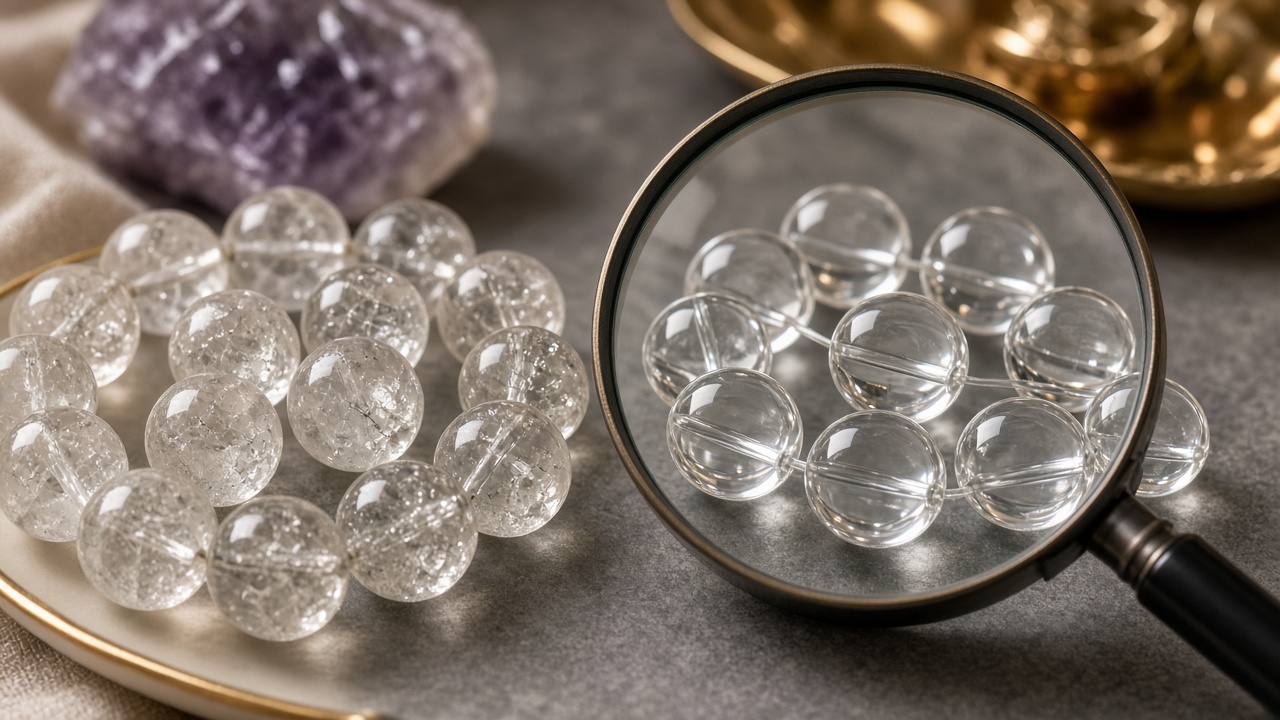
Real vs fake crystal bracelet and how to tell if crystal is real are high-friction Google queries — people get burned by glass sold as “natural healing crystal.”
Quick field checks
- Temperature: real stone feels cooler longer than plastic; glass can also feel cool, so this alone is not proof.
- Inclusions: natural quartz often has tiny veils/clouds. Perfect clarity + identical beads = suspicious.
- Weight: stone beads feel denser than acrylic.
- Price reality: a “rare jadeite” bracelet for pocket change is usually costume jewelry.
- Seller language: “natural,” “dyed,” “glass,” “stabilized” should be stated. Vague “energy crystal” with no mineral name is a warning.
Common lookalikes
| Marketed as | Often actually |
|---|---|
| Citrine | Heat-treated amethyst (still quartz, but disclose it) |
| Turquoise | Howlite dyed blue |
| Jade | Serpentine / dyed quartz |
| “Opalite” | Man-made glass (pretty, just not a mineral) |
What “fake” means ethically
Glass jewelry is fine if sold as glass. The problem is mislabeling. Buy for beauty or symbolism with eyes open.
Buying checklist
- Mineral name + treatment disclosure
- Return policy
- Close-up photos of inclusions
- Reasonable hardness for daily wear
Trust transparent sellers more than mystical adjectives.
Malagram Editorial
The Malagram Editorial blends crystal tradition with modern ritual practice — practical, grounded guidance for people who want their jewelry to mean something and do something.
Wear your intention.
NFC-enabled crystal bracelets that deliver a personalized energy report with a single tap.
Shop the collection